The Project
Inside Our Animation Bench
Why this workshop exists
Plunzreelpebbl started on a crowded desk in Bristol with a cup, a lamp and a phone balanced on three paperbacks. The first test was eleven frames long and flickered terribly. It was also the moment stop-motion stopped feeling like something only big studios could do.
Most beginner guides open with shopping lists. We open with a tiny test, because finishing two seconds of animation teaches more than reading about ten cameras. Every lesson here follows the same path you would follow at a real bench: setup, story, motion, effects, playback.
How we write and test
Tested on the bench
Every technique is tried with ordinary materials before it is written up. If a trick needs an expensive tool, we say so and offer a cheaper route.
Sequential steps
Instructions are numbered and ordered the way you will actually work, so you can follow along with props in hand.
Honest about difficulty
Stop-motion takes patience. We never promise instant mastery; we promise clear next steps and fewer mysteries.
About our images and independence
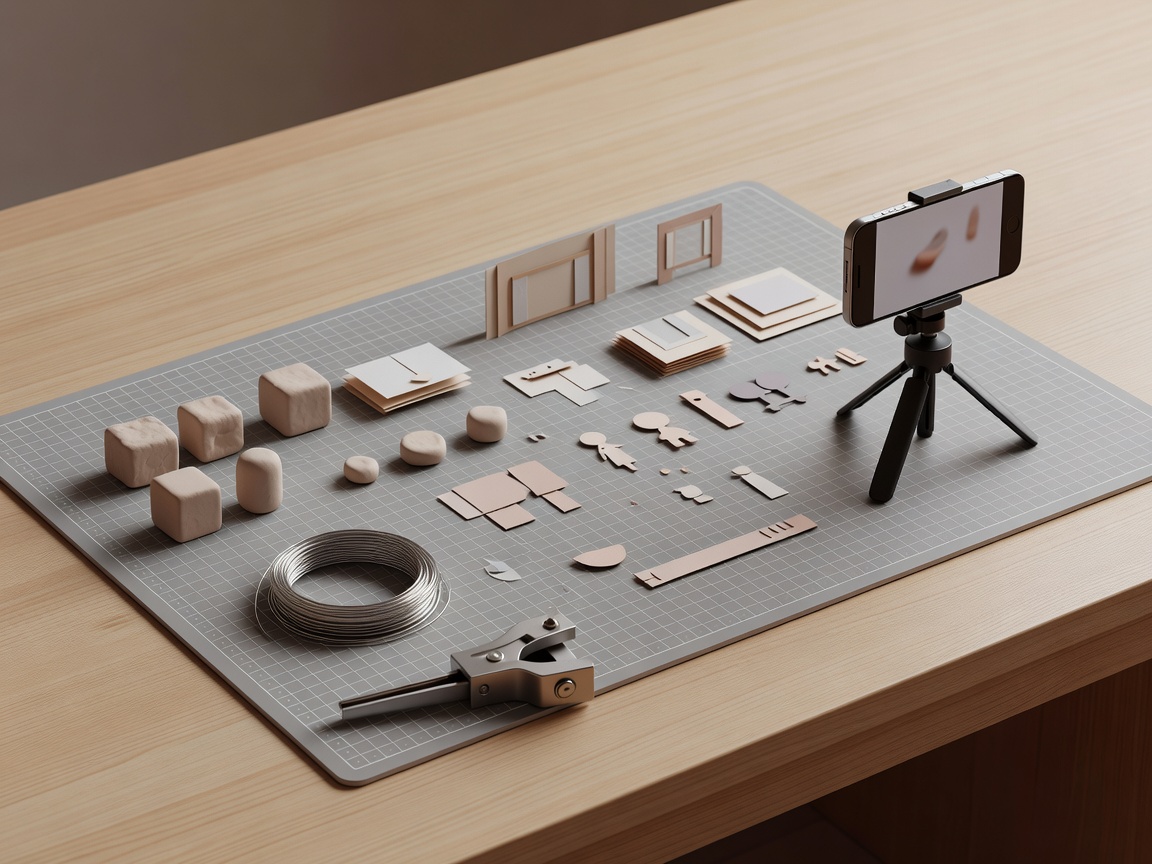
The images on this site are soft-lit 3D renders created as illustrations. They show ideas such as object positions or rig placement clearly; they are not documentary photographs of real productions.
We are independent. We mention films, studios, books and software such as Aardman, Laika, Dragonframe and The Animator's Survival Kit because they are useful references, not because anyone pays us. We have no affiliation with them.
Plunzreelpebbl is published by Plunzreelpebbl Studio Ltd, a small company registered in England & Wales.